India HVAC Duct Fabrication Market — 2026 Buyer's Playbook
A practical playbook for the Indian HVAC duct fabrication market in 2026. Covers Bureau of Indian Standards (BIS) and SMACNA framework, the PLI (Production-Linked Incentive) scheme driving manufacturing FDI, hyperscale data centre demand from AWS / Azure / Google / Yotta / NTT, location selection across Pune / Chennai / Bangalore / Hyderabad / NCR, equipment capex, Indian labour cost realities, and the Make-in-India versus direct international import sourcing path.
India is in a structural manufacturing expansion driven by the PLI (Production-Linked Incentive) scheme, the supply chain diversification, the hyperscale data centre wave and ongoing infrastructure modernisation. Manufacturing FDI is concentrated in Tamil Nadu (Apple/Foxconn, EVs), Karnataka (Apple ecosystem, semiconductor), Gujarat (Tata Electronics semiconductor, Micron), Maharashtra (Pune/Aurangabad automotive and IT), and Telangana (Hyderabad pharma and IT). Each of these projects requires HVAC for the production environment, the office, and (for high-tech facilities) cleanroom HVAC.
The hyperscale data centre wave is equally significant — AWS Mumbai, Azure (multiple), Google (Mumbai, Delhi NCR), Yotta (Navi Mumbai, Greater Noida), NTT, CtrlS, AdaniConnex are all building large facilities. Indian HVAC duct fabricators serving these projects need SMACNA-aligned capability and the production volume to deliver 6,000-15,000 m² over typical 12-18 month project windows.
Standards and codes
IS 277 — galvanized sheet metal Indian standard
IS 655 — air ducts and air handling unit standard
SP 7 (NBC of India) — National Building Code, references both IS standards and SMACNA for HVAC
SMACNA HVAC Duct Construction Standards — dominant on international FDI, hyperscale data centre, international hotel/airport projects
EN 1505 — applies on European-led FDI projects
ASHRAE 90.1, 62.1 — referenced on most international-led HVAC system designs
IGBC and LEED certification often drives tighter leakage class than baseline IS 655
BIS certification — required for some industrial machinery imported into India
2026 demand drivers
PLI scheme manufacturing FDI: Apple/Foxconn in Tamil Nadu and Karnataka, Tata Electronics semiconductor in Gujarat (Sanand, Dholera), Micron memory in Sanand, EV manufacturing (Tata, Mahindra, Ola Electric), pharma expansion (Sun Pharma, Cipla, Aurobindo), specialty chemical and battery manufacturing.
GIFT City and IFSC: financial services SEZ in Gujarat, multiple commercial towers and data centre clusters under construction.
Infrastructure: metro extensions in Delhi NCR, Mumbai, Bangalore, Chennai, Hyderabad, Pune, Kolkata. New international airports (Jewar/Noida, Bhogapuram). High-speed rail.
Hospitality: international hotel groups expanding across major cities.
Residential: organized real estate continued growth in Pune, Bangalore, Hyderabad, NCR, Mumbai metro region.
Location selection
Pune (Maharashtra): manufacturing FDI cluster, automotive and IT, well-established sheet metal industry. Recommended for fabricators serving Maharashtra/Gujarat manufacturing FDI. Industrial land lease ~USD 45-95/m²/year (MIDC industrial parks).
Chennai (Tamil Nadu): Apple/Foxconn ecosystem, automotive, port logistics. Recommended for fabricators serving Tamil Nadu/Karnataka FDI and Chennai metro projects. Industrial land lease ~USD 40-80/m²/year (SIPCOT parks).
Bangalore (Karnataka): IT, hyperscale data centre, R&D facilities. Highest white-collar labour cost in India but strong technical talent. Recommended for fabricators serving hyperscale and IT facility projects. Industrial land lease ~USD 65-120/m²/year (peripheral KIADB parks).
Hyderabad (Telangana): pharma, IT, GIFT-style FinTech zones, semiconductor (HCL Foxconn). Strong growth, lower labour cost than Bangalore. Industrial land lease ~USD 35-75/m²/year.
NCR / Delhi-Gurgaon-Noida: commercial real estate, residential, hyperscale data centre (Yotta Greater Noida), metro infrastructure. Industrial land lease ~USD 50-110/m²/year.
Sanand (Gujarat): emerging semiconductor and EV cluster, near Tata Electronics and Micron. Lower land cost, fewer established fabricators — opportunity for first-mover.
Equipment list and capex
SBAL-V auto duct production line
SBTF-1500 spiral tubeformer
TDF flange forming machine
SBLC lockformer
CNC plasma cutter
Hydraulic shear and folding
Auxiliary equipment
Equipment ex-works Taokron is quoted on request. Add 12-20% for freight, marine insurance, Indian customs duty (industrial machinery 7.5-15% basic + 18% IGST, with PLI scheme reductions for qualifying sectors), and inland trucking from Mumbai/Chennai/Mundra port. Add USD 40,000-100,000 for building lease, electrical connection, compressed air and small tooling. Total turnkey capex is quoted on request; the machine set plus your local costs determine it.
PLI scheme exemptions reduce import duty for capital equipment in qualifying sectors — confirm with a chartered accountant; the saving on capital equipment can be USD 40,000-90,000 for PLI-qualifying fabrication operations.
Indian labour cost
Indian sheet metal labour is competitive across the market, with deep technical talent at the engineering and supervisor level:
Project / contract manager (B.E./B.Tech with 5+ years): USD 22,000-40,000/year
HVAC design engineer: USD 18,000-32,000/year
The deep engineering talent pool is a key Indian advantage — Indian fab shops can hire B.E./B.Tech engineers for QA, project management and design roles relatively cost-effectively, supporting more sophisticated projects than purely cost-driven markets.
Installed in India: our machines in Indian duct shops
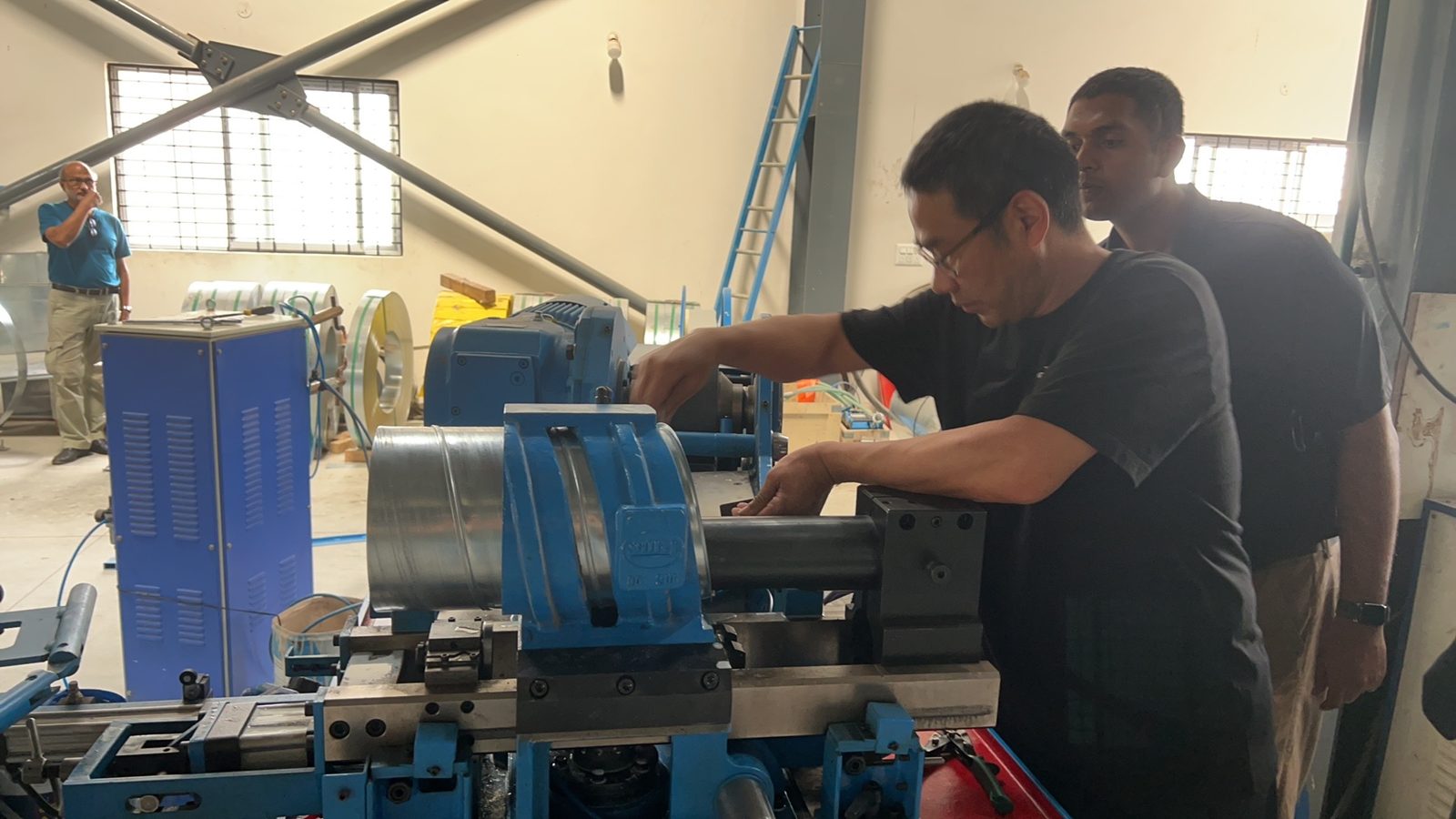
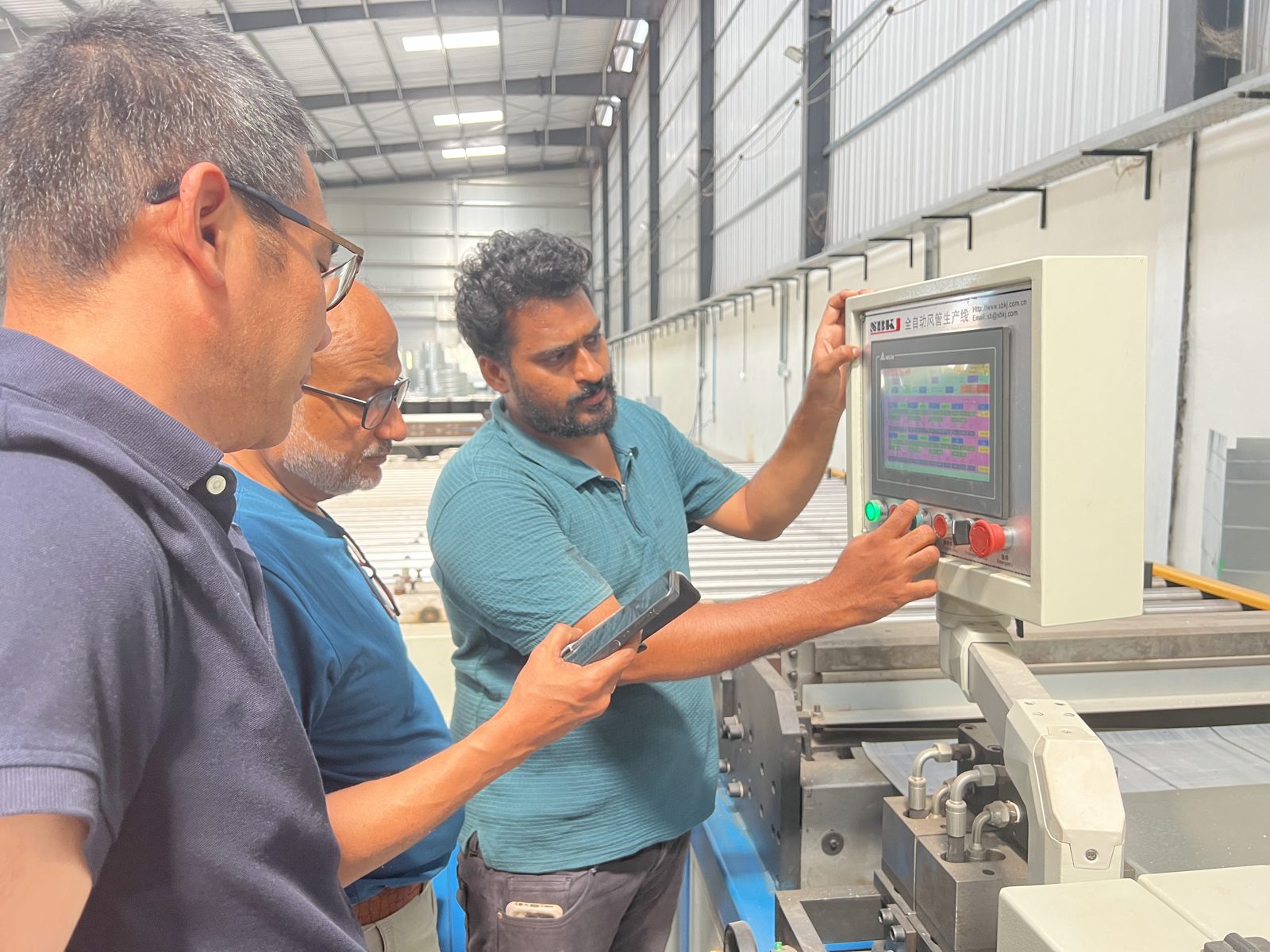
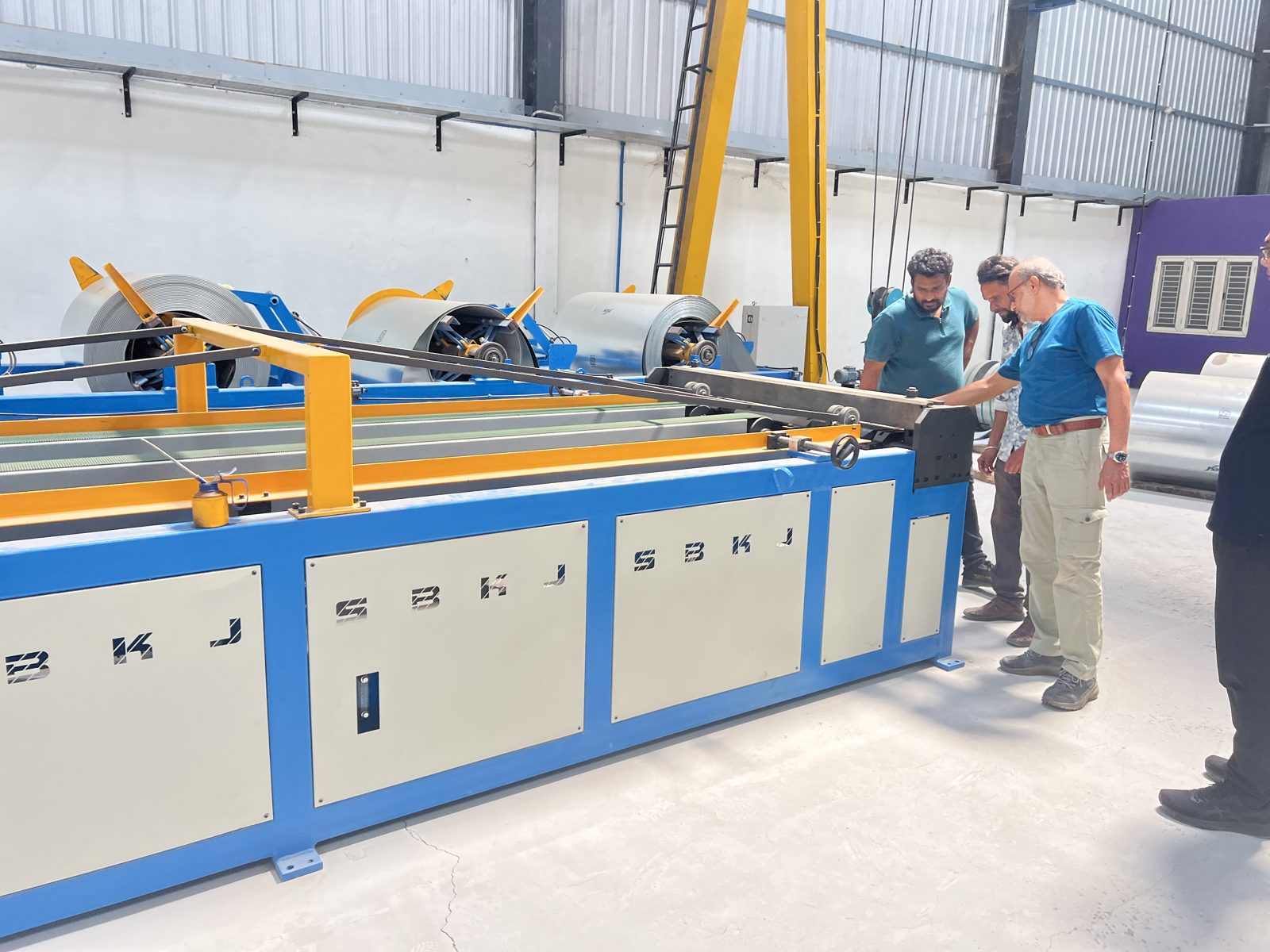
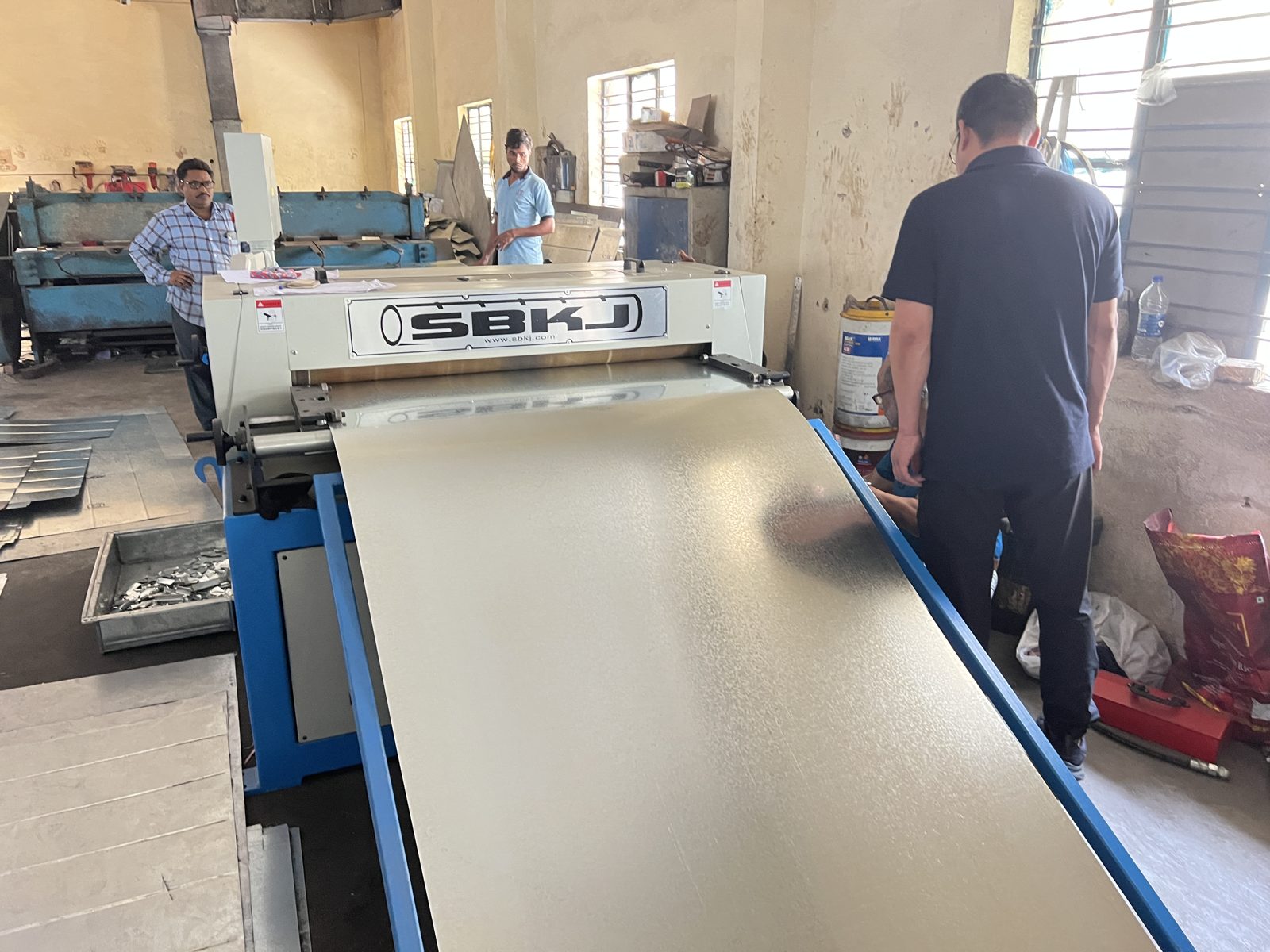
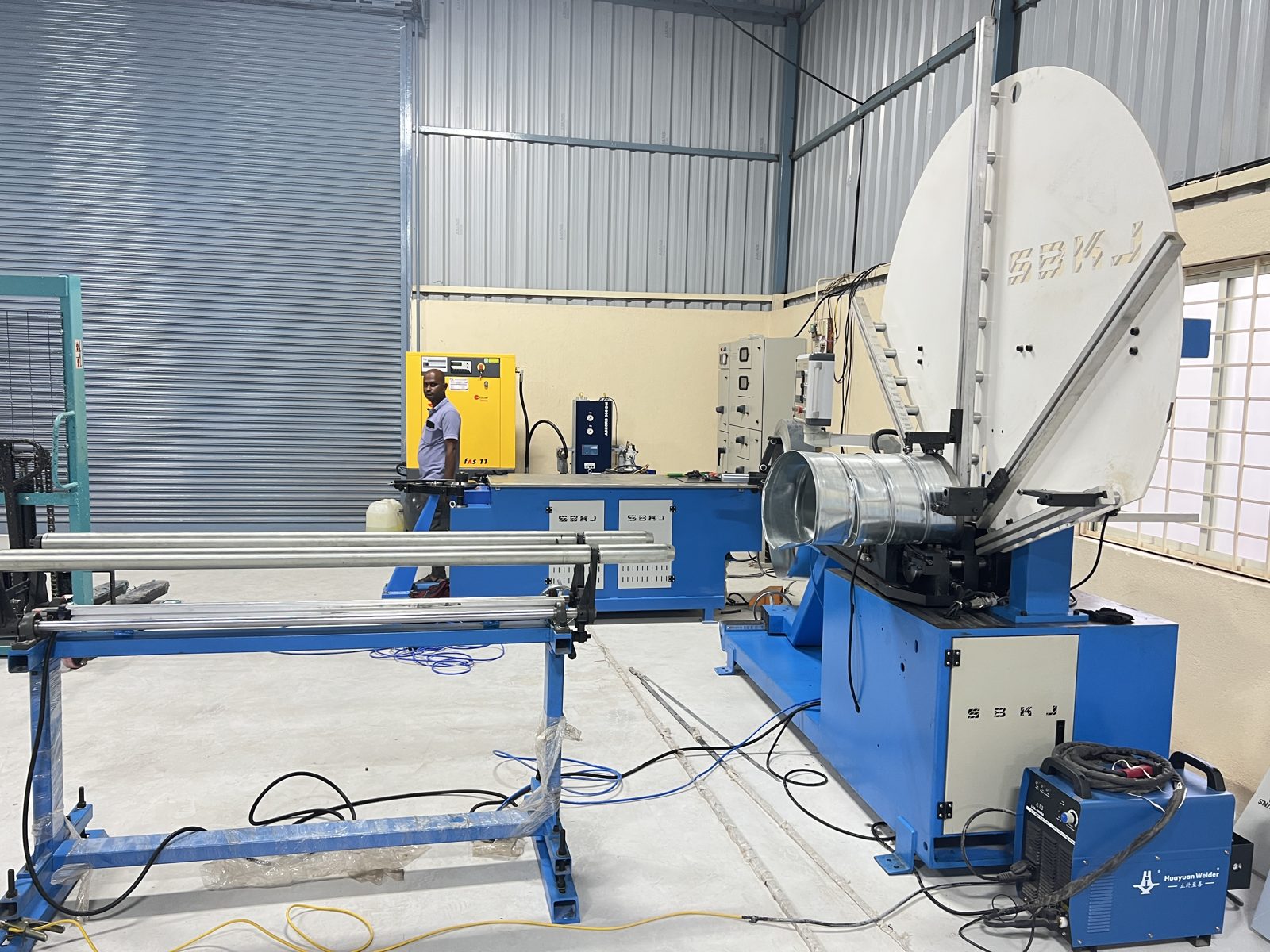
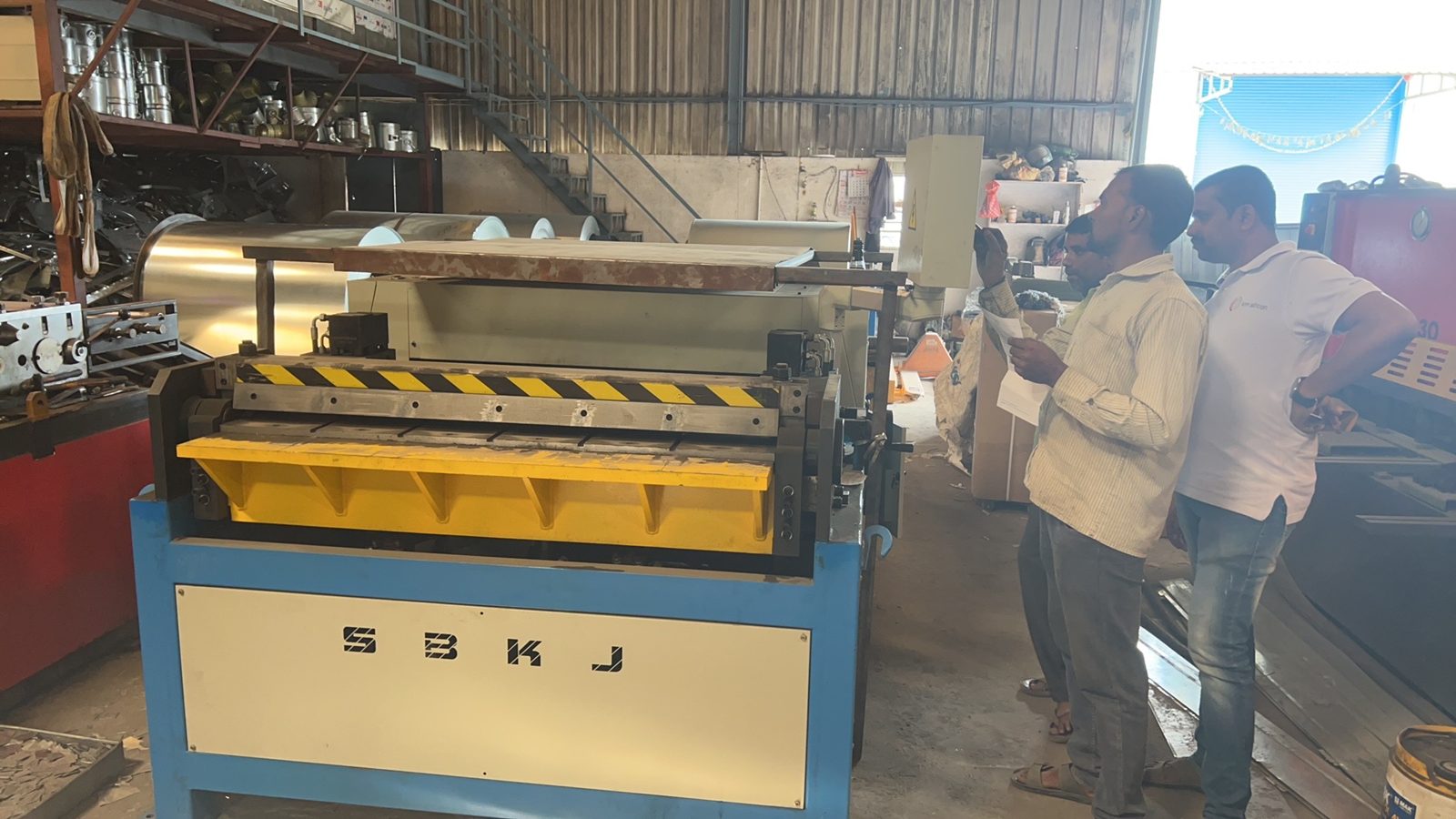
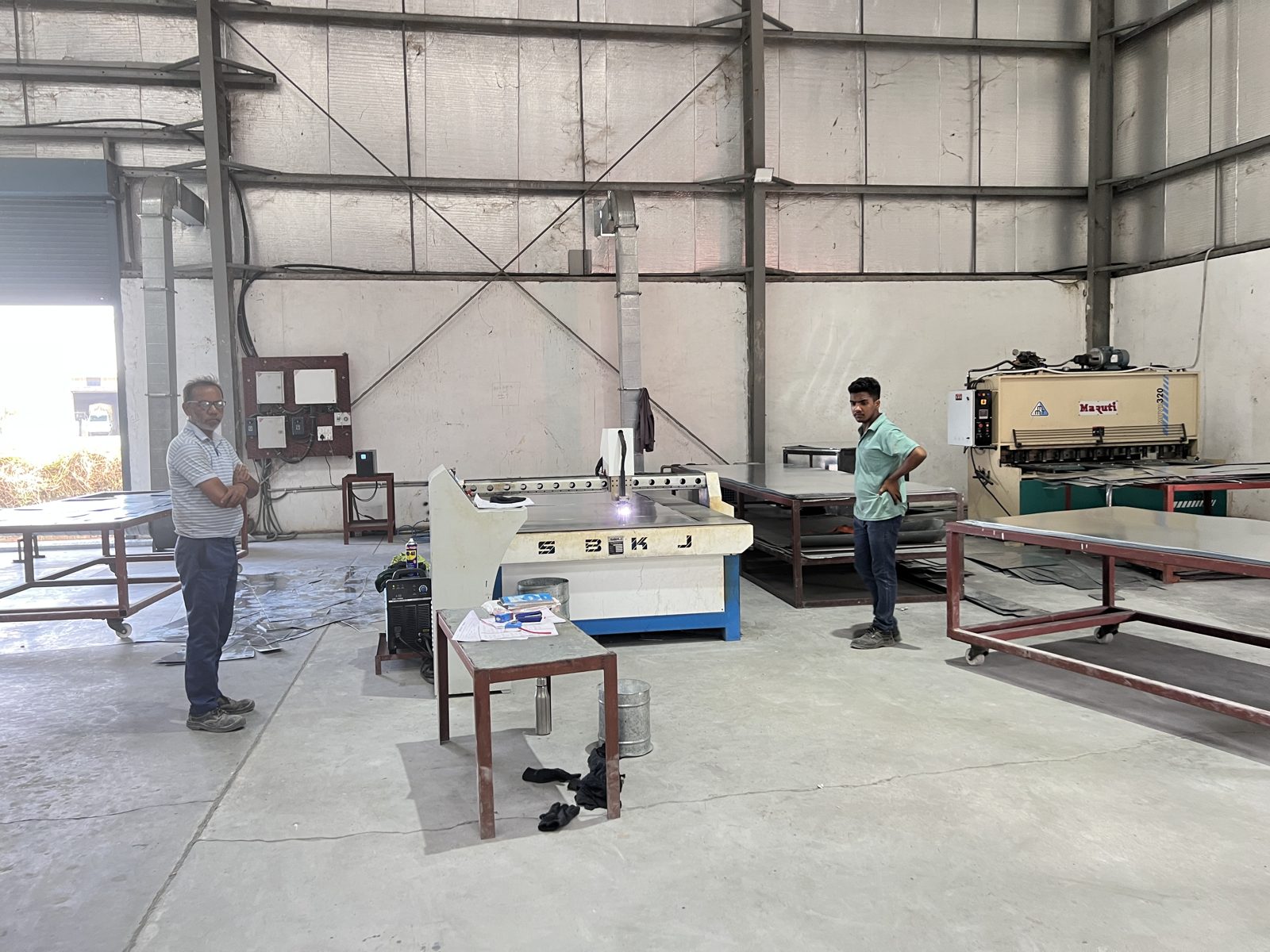
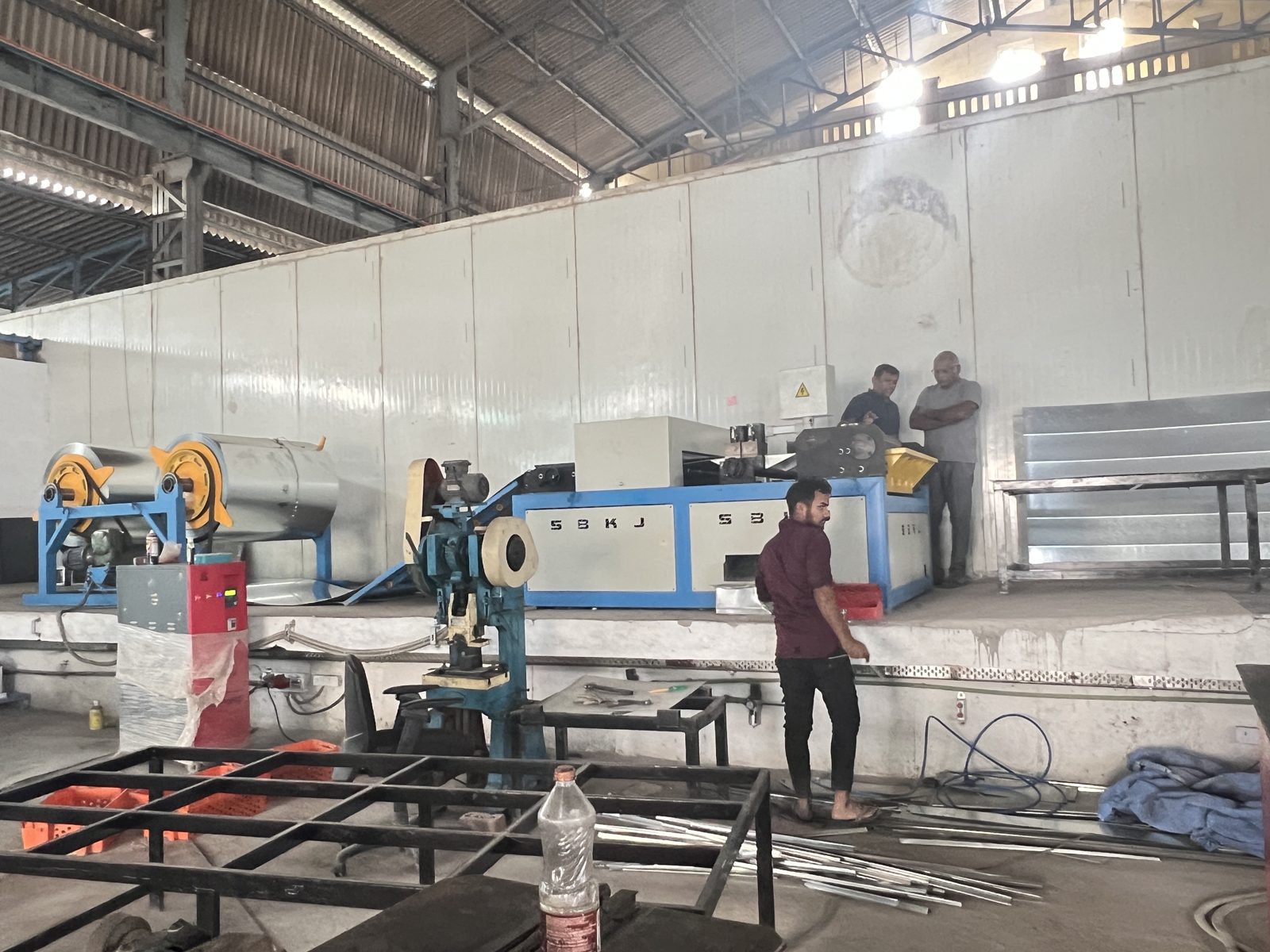
These photos and clips come from a June 2026 visit to Indian duct shops that run our machines: auto duct lines, spiral tubeformers, TDF flange machines, lockformers and plasma tables. Our engineers commissioned the machines on site and trained the operators. Ask us on WhatsApp for more photos and videos from Indian installations.
A Taokron engineer setting up the spiral duct flanging machine on site during commissioning.Operator training on the auto line HMI: the shop's lead operator runs a job while our engineer checks the settings.Handover of an auto duct line: our engineer walks the owners through the coil feed and the forming stations.The coil feed and shear end of an auto duct line, with our engineer on the line.A spiral tubeformer line with its run-out table, installed in a new Indian factory.A TDF flange forming machine at a duct shop, with the owner and his team.A CNC plasma cutting table in production at an Indian fabrication shop.A rectangular duct line in a large fabrication hall.
Video from the shop floor
A spiral tubeformer making large-diameter spiral duct.Running duct through a seam closing machine, operator on the touch panel.A lockformer in daily production.Operators folding rectangular duct sections.A plasma table cutting duct parts in an Indian shop.The output end of a rectangular duct line.A duct shop floor with the plasma table and the coil line.A busy duct shop running our machines.
Taokron India-ready package
Indian 415V/50Hz electrical wiring with IEC fuse standard
English operator manual
ISPM-15 fumigated crating for Indian customs
12-hour reply from Taokron engineering, in English
IS 277/IS 655 baseline (Bureau of Indian Standards), SMACNA dominant on international FDI/hyperscale/international hotel projects, EN 1505 on European FDI. IGBC/LEED often drive tighter leakage.
Where should I locate?
Pune (FDI manufacturing), Chennai (Apple/Foxconn, port), Bangalore (hyperscale, IT), Hyderabad (pharma, IT), NCR (commercial), Sanand (semiconductor first-mover).
What is the capex?
Total turnkey capex is quoted on request — SBAL-V plus SBTF-1500 plus ancillaries plus building. PLI scheme exemptions can save USD 40-90K on customs duty for qualifying sectors.
What sectors drive Indian HVAC demand in 2026?
PLI scheme manufacturing FDI is the largest driver — Apple/Foxconn (Tamil Nadu, Karnataka), semiconductor (Tata Electronics in Gujarat, Micron in Sanand), pharma expansion, electric vehicle (Tata, Mahindra, Ola). Hyperscale data centre is the fastest-growing segment with AWS, Azure, Google, Yotta, NTT, CtrlS all building large facilities in Mumbai/Pune/Chennai/Hyderabad. Plus residential, infrastructure (metros, airports), hospitality and healthcare modernisation.
Where should I locate an HVAC duct fab shop in India?
Five primary hubs: Pune (manufacturing FDI, automotive, IT), Chennai (manufacturing FDI, port logistics, hyperscale), Bangalore (IT, R&D, hyperscale data centre), Hyderabad (pharma, IT, GIFT-style FinTech zones), NCR/Delhi-Gurgaon-Noida (commercial, residential). Each hub has different sector demand profile. Pune/Chennai for FDI manufacturing; Bangalore/Hyderabad for hyperscale data centre; NCR for commercial real estate.
What is the capex for an Indian HVAC duct fab shop?
For a turnkey Indian HVAC duct fab shop with one SBAL-V auto duct line, one SBTF-1500 spiral tubeformer, TDF flange machine, lockformer, plasma cutter and ancillaries, the equipment ex-works Taokron is quoted on request. Add 12-20% for freight, marine insurance, Indian customs duty (industrial machinery typically 7.5-15% basic + 18% IGST, with PLI scheme reductions for qualifying sectors) and inland trucking from Mumbai/Chennai/Mundra port. Add USD 40,000-100,000 for building lease and utility connection. Total turnkey capex is quoted on request; the machine set plus your local costs determine it.
What is typical Indian HVAC fab labour cost?
Indian sheet metal labour is relatively low-cost. Approximate fully-loaded annual cost (2026, USD): senior fitter / supervisor USD 7,500-15,000; HVAC fitter USD 4,000-8,000; auto duct line operator USD 5,500-11,000; sheet metal welder USD 6,500-13,000; QA/QC engineer USD 14,000-25,000; project manager USD 22,000-40,000. Indian engineering talent is deep — fabrication shops can hire B.E./B.Tech engineers for project management roles relatively cost-effectively.
12-hour reply
Setting up in India? A Taokron engineer replies within 12 hours.